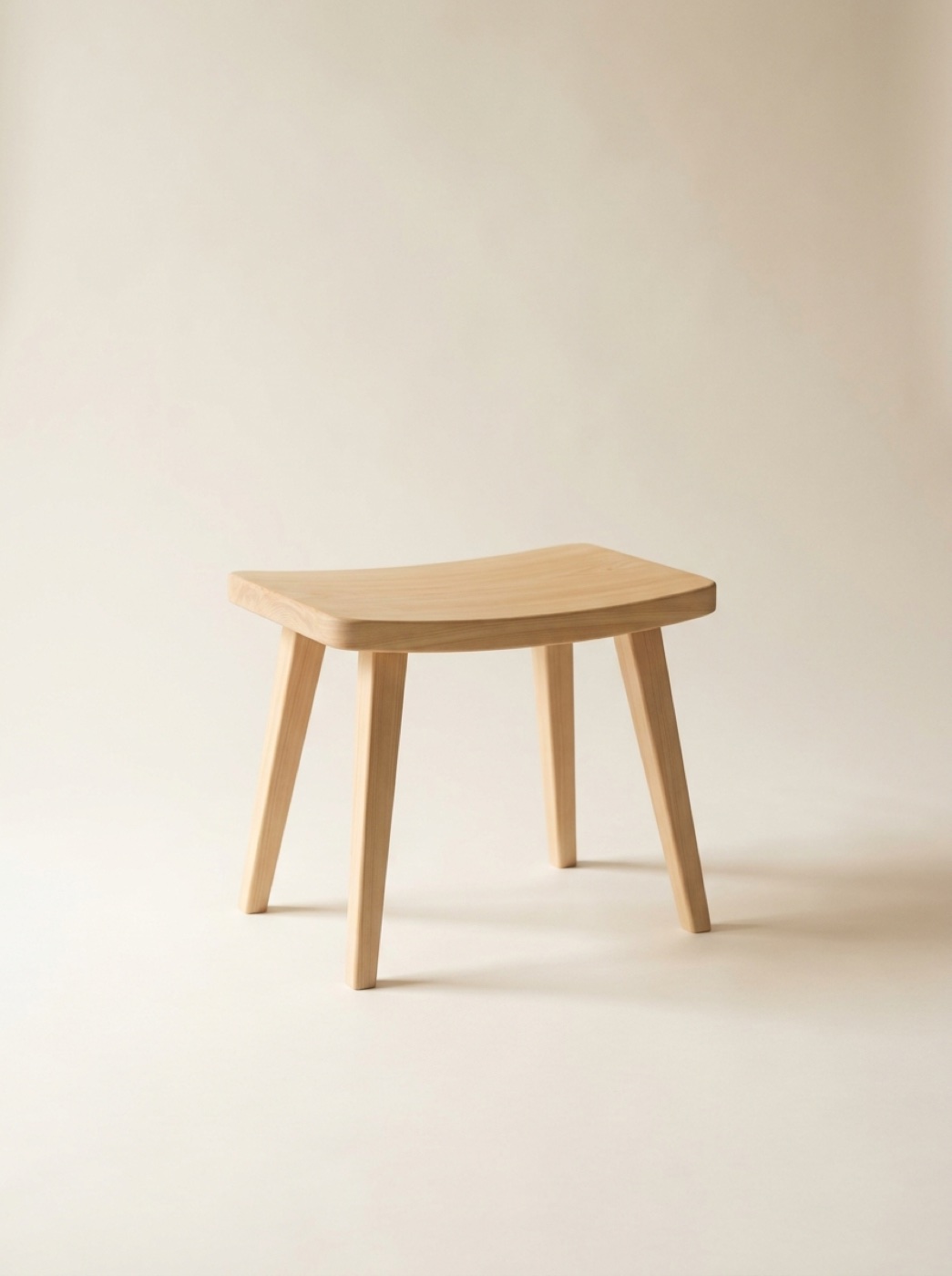
The hand that remembers
At the edge of a cypress forest, the same families have shaped wood for generations. This is how a Nagomi piece comes to be.
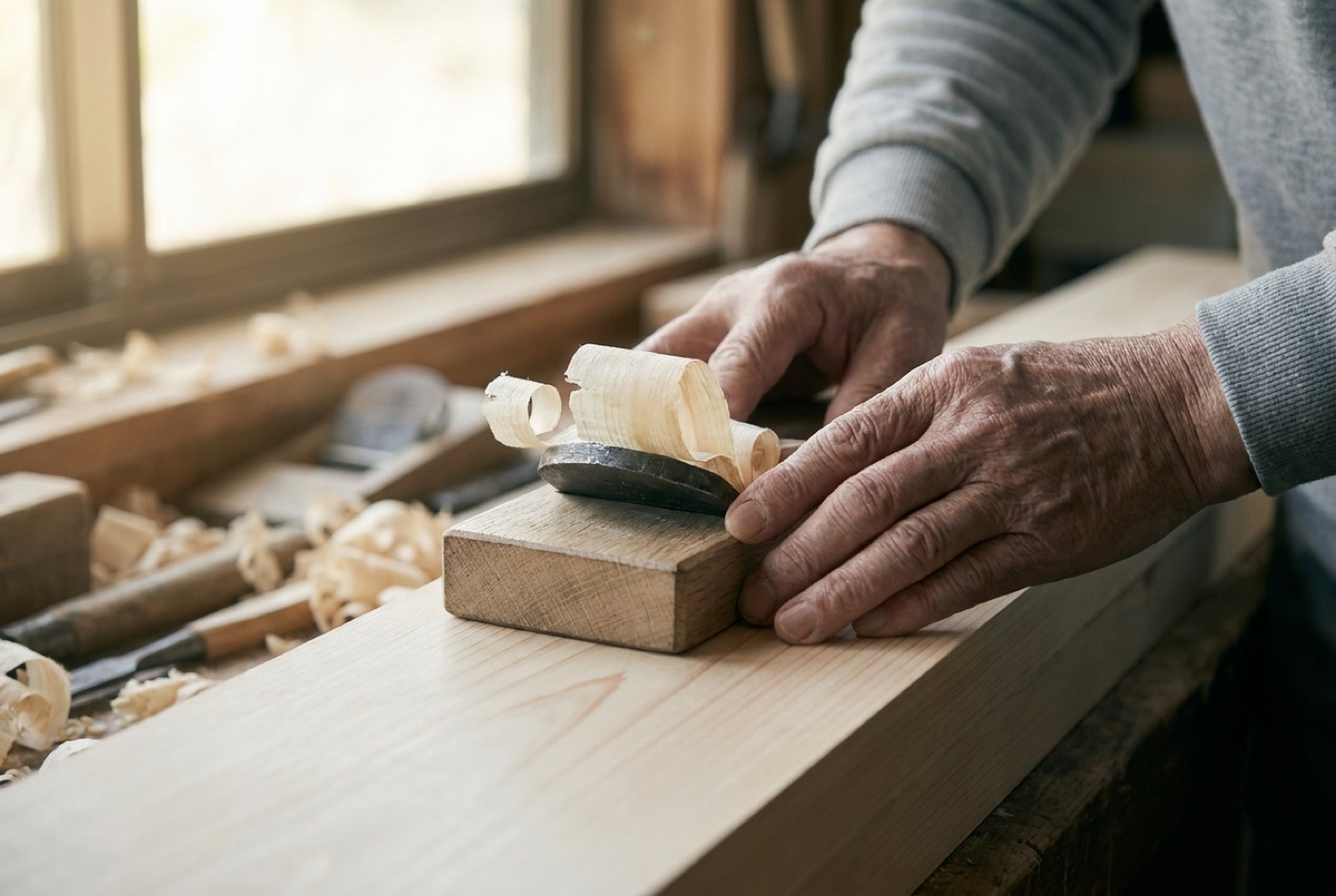
We buy no more wood than the forest can give back. Each tree is chosen by a single sawyer, milled slowly, and rested for two full years before it is ever cut for a chair.
By the time it reaches the bench, the wood is calm — dry, stable, and ready to hold a joint that will not loosen in a lifetime. Our joiners work almost entirely by hand. A mortise is pared, tested against the light, pared again. Nothing is glued that could be jointed; nothing is screwed that could be pegged.
One. The forest
Cypress and oak, chosen tree by tree and rested for two years before the first cut.
Two. The joint
Hand-cut joinery — mortise, tenon and peg — assembled with almost no metal or glue.
Three. The finish
Hand-planed to a sheen, then oiled with natural wax. Renewable for the life of the piece.
Made to be mended.
A Nagomi piece is never finished with us. Should a surface wear or a leg loosen after twenty years, send it home — we re-oil, re-joint and return it, so it can begin again.
The Japanese have a word for the beauty of a well-mended thing. We build for exactly that future.
Shop the pieces